
The Job
Operations
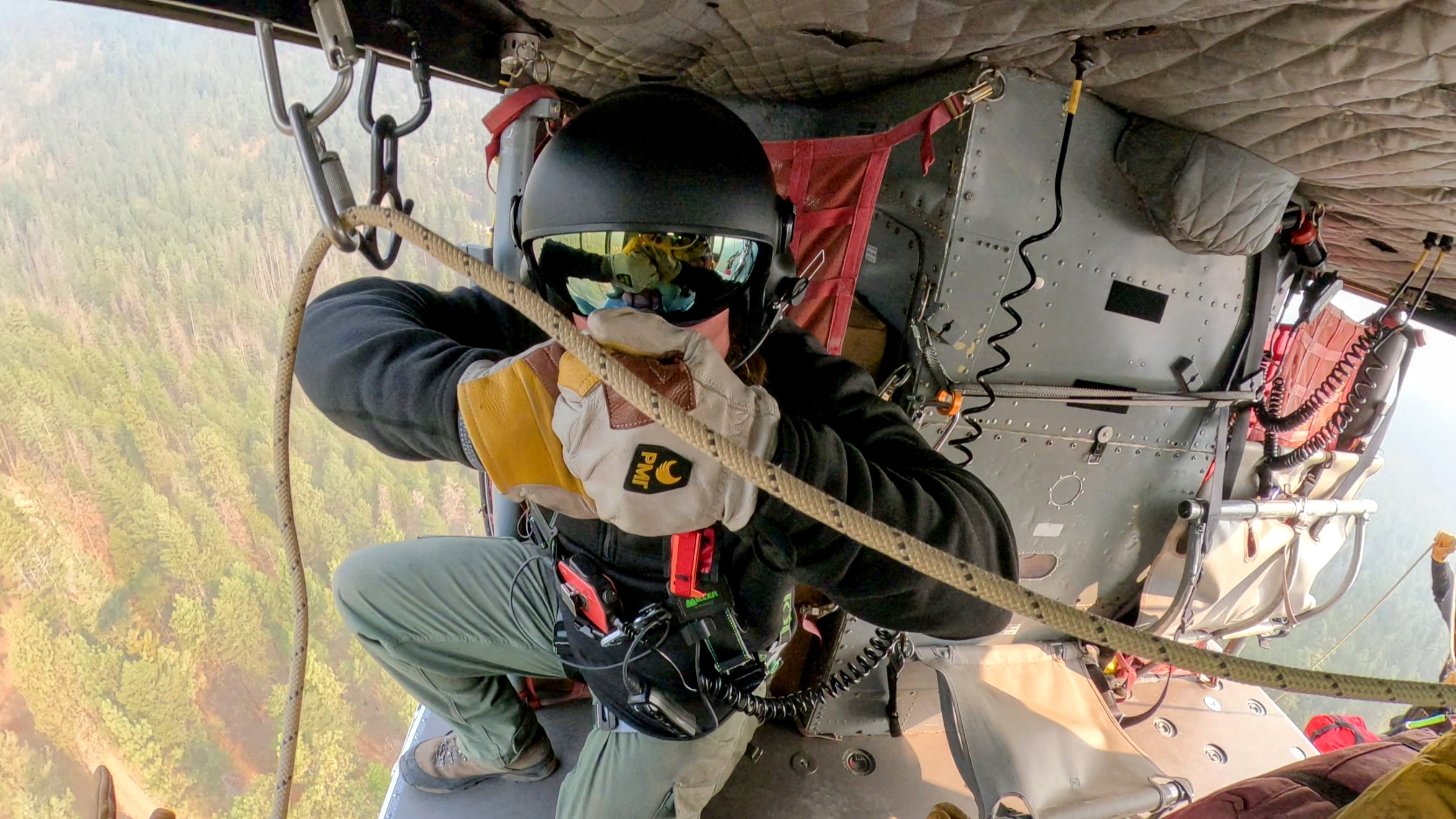
Rappelling is our most specialized method of accessing wildfires, but it represents only one part of the job. North Idaho Rappellers are firefighters first. Crewmembers must be capable of operating independently, managing helicopter operations, making sound decisions, and working effectively in small modules with limited support.
Our primary responsibility is rapid initial attack. Once on the ground, rappellers perform the fundamental duties of wildland fire suppression: assessing fire behavior, establishing incident command, constructing fireline, operating chainsaws and hand tools, and coordinating aviation resources. Assignments frequently involve operating in modules as small as two firefighters, carrying sufficient equipment and supplies to remain self-sufficient for multiple operational periods.
Beyond initial attack, the crew supports conventional helitack operations, including personnel and cargo transport, reconnaissance, logistical support, and large-fire assignments. Daily responsibilities also include equipment maintenance, aviation preparation, training, and maintaining operational readiness.
The work demands technical competence, personal accountability, adaptability, and the ability to perform consistently under challenging conditions.
Fitness and qualiFications
All wildland firefighting is physically demanding. Helicopter rappelling adds the challenges of operating in small modules, carrying specialized equipment, and working in remote locations without immediate logistical support.
Following suppression of a remote fire, rappellers may be required to carry ropes, harnesses, flight helmets, line gear, chainsaws, hand tools, water, and other equipment to the nearest road or suitable pickup location. These pack-outs can cover miles of steep, uneven, off-trail terrain, with individual loads exceeding 110 pounds.
Every crewmember must be capable of carrying their share of the workload.
Physical fitness is not separate from job performance. It directly influences operational safety, decision-making, endurance, and mission success. In this profession, an individual’s physical capabilities can have life-or-death consequences for themselves and their teammates.
The demands of the job require a combination of cardiovascular endurance, muscular endurance, functional strength, and the ability to move efficiently under heavy loads. Maintaining a high level of physical fitness is an ongoing professional responsibility, not simply a prerequisite for employment.
BEYOND QUALIFICATION
Becoming a qualified rappeller is only the beginning.
As experience and qualifications develop, crewmembers may pursue single-resource assignments, advanced fireline and aviation positions, aerial ignition training, and opportunities to work with other helicopter programs. These assignments contribute to developing well-rounded firefighters, leaders, and aviation professionals.
North Idaho Rappellers are part of a small national community operating under common training, equipment, and procedural standards. This standardization allows qualified rappellers to integrate with other crews during periods of increased fire activity, a practice commonly known as boosting.
Although rappel programs operate across different forests and regions, they share the same fundamental expectations of professionalism, technical proficiency, and accountability.
Wearing the North Idaho Rappellers name means representing more than our individual crew. It means contributing to a national program built on trust, shared standards, and a commitment to taking on difficult assignments in difficult places.
INTERESTED IN JOINING THE CREW?
Visit our Recruitment page to learn about qualifications, hiring opportunities, physical preparation, and the process of becoming a qualified helicopter rappeller.